
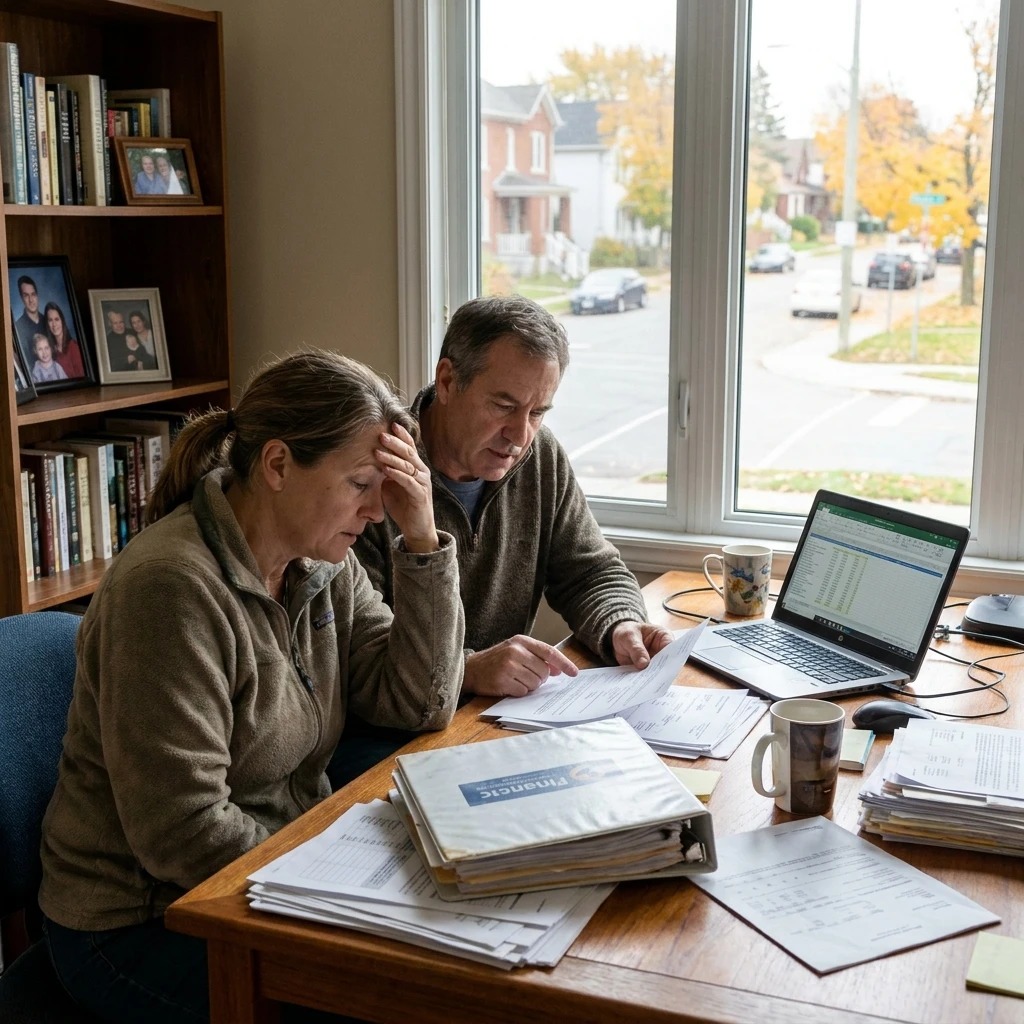
How to Prequalify for a Home Loan With Poor Credit in Canada Without Getting Shut Down
A practical guide for Canadian buyers and homeowners who do not fit a bank’s tidy spreadsheet, especially across Alberta, BC, Saskatchewan, and Ontario.
Introduction
If you are trying to prequalify for home loan with poor credit, you have probably already felt how fast a simple application can turn into a hard no. Most lenders run applicants through a rigid formula, and anyone with bruised credit, high debt, or self employed income can get screened out before the full story is even heard.
That matters right now because rates, renewals, and housing costs have made cash flow tighter. Add in contract work, seasonal income, or a couple of missed payments from a rough year, and it is easy to feel like the big banks only want borrowers who come in a neat package.
This article explains what prequalification really is in Canada, what lenders look at when your credit is not perfect, and how to prepare your numbers so you can have a useful conversation and not just another rejection.
TL;DR: Prequalifying With Poor Credit, in Plain English
- You are being judged by a formula that prioritizes credit score, debt ratios, and income stability, sometimes at the expense of common sense.
- Prequalification matters because it gives you a realistic budget and helps you avoid multiple lender hits while you are still figuring things out.
- A prequalification is not the same as approval, and online calculators often ignore real world complications like self employed income add backs or debt consolidations in progress.
- A better way to think about it is as a packaging exercise: clarify your story, document your income properly, and decide which lending channel actually fits your profile.
- Next steps include checking your credit details, tightening debt ratios, gathering the right income docs, and mapping out an A lender, alternative lender, or private plan.
What Does It Mean to Prequalify for a Home Loan With Poor Credit?
To prequalify for home loan with poor credit means getting an early estimate of what you might be able to borrow, based on a snapshot of your income, debts, down payment, and credit profile. In Canada, prequalification is usually less formal than a full mortgage approval. It is often based on what you report and what a lender or broker can reasonably infer from documents you share upfront.
For someone rebuilding credit, the goal is not just a number. It is clarity: whether your file is more likely to fit an A lender (prime bank), an alternative lender (often called B lenders), or a short term private solution while you repair credit and reduce debt.
Why Prequalifying for a Home Loan With Poor Credit Matters
A solid prequalification can save you time, stress, and credit damage. Every time you apply broadly and get declined, you can end up with extra credit inquiries and more discouragement, without learning what actually needs to change.
It also helps you plan around tradeoffs. With weaker credit, the path forward might involve a larger down payment, paying down certain debts, choosing a different property type, or accepting a higher rate for a period of time. Knowing the likely lane early lets you make decisions with your eyes open.
Step 1: Know What Lenders Actually Measure (Hint: It is Not Just Your Score)
Credit score gets the spotlight, but lenders also care about what is inside the report: late payments, collections, consumer proposals, utilization, and how recent the issues are. Two people can have the same score and very different outcomes.
Debt ratios are the other big gate. In Canada, lenders look at how much of your gross income goes to housing costs and total debt payments. If you are carrying credit card balances, car loans, or tax arrears, your ratios can sink an otherwise workable application.
Think of your mortgage file like a suitcase that has to close. If you keep jamming in extra debt, it is like trying to zip up an overstuffed bag with one knee on the lid. The fix is not wishful thinking, it is repacking. Takeaway: improving ratios and the credit details often matters more than chasing a perfect score.
Step 2: If You Are Self Employed, Document Income the Way Underwriters Expect
Non traditional income is common across Calgary and beyond, especially with contractors, business owners, and commission based work. The issue is that lenders want stable, provable income, and they often average income over time.
If you are incorporated or claiming lots of write offs, your taxable income can look smaller than your real cash flow. Some lenders will consider add backs like depreciation, and alternative lenders may accept different documentation, but only if it is presented properly.
Around the middle of Stampede season, plenty of people in Calgary can tell you income does not always arrive in tidy monthly chunks. Mortgage underwriting prefers tidy chunks anyway. Takeaway: the right income documents and a clear explanation can make a bigger difference than another year of waiting.
Step 3: Choose the Right Lending Channel for Your Situation
When you prequalify for home loan with poor credit, you are also choosing where you fit. Here is a simple comparison that helps:
| Lending path | Who it tends to fit | Typical tradeoffs |
|---|---|---|
| A lenders (prime banks) | Strong credit, clean ratios, easy to document income | Best rates, strict rules |
| Alternative lenders (B lenders) | Bruised credit, higher ratios, self employed complexity | Higher rates and fees, more flexible underwriting |
| Private lenders | Short term bridge, urgent timelines, credit events | Highest cost, shorter terms, needs a clear exit plan |
No single path is “best.” The best option is the one that gets you a mortgage you can actually afford, with a plan to improve later. Takeaway: matching your file to the right lane reduces declines and keeps your credit from taking extra hits.
Step 4: Avoid the Prequalification Traps That Waste Time
A few patterns cause unnecessary denials:
- Using online estimates that ignore condo fees, property taxes, and stress test realities.
- Applying everywhere at once after a decline, instead of diagnosing the reason.
- Moving money around without documenting it, especially for down payment and gifted funds.
- Leaving small collections unresolved when they are easy to settle and update.
One more practical note: if you are refinancing to consolidate debt, the story changes. A higher rate might still improve your monthly cash flow if it replaces expensive revolving debt. Takeaway: the fastest path is usually the clearest story with clean documentation.
How to Apply This
Use this quick process before you talk numbers with any lender:
- Pull your credit report and list what is hurting you most (missed payments, utilization, collections, recent inquiries).
- Calculate your rough debt ratios using your current debt payments, not best case guesses.
- Gather income documents that match your situation: pay stubs and T4s, or two years of Notices of Assessment, plus financial statements if you are self employed.
- Document down payment clearly, including a paper trail for any gift funds.
- Decide your target: purchase, refinance, or renewal solution.
- Ask for a prequalification plan that includes options, not just a yes or no.
If you do this well, you can prequalify for home loan with poor credit with fewer surprises and more control.
Frequently Asked Questions
Does prequalification hurt my credit in Canada?
It depends. A basic discussion and document review should not affect your credit. A formal application that triggers a hard inquiry can. Ask what type of credit pull is involved before proceeding.
What credit score do I need to qualify?
There is no single cutoff across all lenders. Prime lenders generally want stronger credit, while alternative and private options can work with lower scores depending on down payment, income, and the overall story.
Can I get approved if I have high debt?
Sometimes, yes. The key is whether your debt ratios can be brought into range through paydowns, consolidation, increasing provable income, or choosing a lower purchase price.
Will a larger down payment help?
Often. More equity reduces the lender’s risk and can open doors, especially if credit is bruised. You still need to show you can carry the payments.
How long after a missed payment should I wait?
It depends on the lender and how recent and severe the issue was. A pattern of on time payments after the problem can help, but so can explaining what happened and showing it is resolved.
Key Takeaways That Actually Move the Needle
- Prequalify for home loan with poor credit by focusing on credit details, debt ratios, and documentation, not just a score.
- Self employed and contract income can work, but only if it is packaged the way underwriters can verify.
- A lenders, alternative lenders, and private lenders are different tools for different situations.
- Avoid scattershot applications that create extra inquiries without fixing the underlying issue.
- A prequalification should come with a plan, including how you could improve terms over time.
If you feel overlooked by a major bank, it does not automatically mean homeownership is off the table. It usually means your file needs a different approach, better documentation, or a different lending channel. Start by getting your numbers straight and understanding what is driving the decision. Then make one clean, well supported move instead of five frustrated ones. Even small changes, like paying down a maxed card or clearing a tiny collection, can shift the outcome. For motivation, pick a specific target date and write it on something you will see every morning, even if it is the back of a grocery receipt stuck to your fridge with a magnet shaped like a tiny moose.
Book one focused conversation to map your options: reach out to The Mortgage Professor and ask for a prequalification plan built for a real life file, not a perfect one.